- Home
- Hexatonic
Hexatonic
Hexatonic
Basic Information
- Title: 肚子疼(Dù Zi Téng) Stomach Hurts
- Region: Zhenping County, Henan Province, China
- Demonstrated by 王振亚 Zhenya Wang, collected by 王宸亚 Chenya Wang
- Source: 中国民间歌曲集成全国编辑委员会. (1997–2009). 中国民间歌曲集成[Collection of Chinese folk songs]. 中国ISBN中心.
Chinese Lyrics
爹哟 娘哟, 真真/肚子疼, 真真/肚子疼,
花胡椒, 面疙瘩, 一喝/就不疼, 一喝/就不疼。
花胡椒, 面疙瘩, 一喝/就不疼, 一喝/就不疼 。
Pinyin
Diē yo niáng yo, zhēn zhēn / dù zi téng, zhēn zhēn / dù zi téng
Huā hú jiāo, miàn gē da, yì hē / jiù bù téng, yì hē / jiù bù téng.
Huā hú jiāo, miàn gē da, yì hē / jiù bù téng, yì hē / jiù bù téng.
English Translation
Oh, Father! Oh, Mother! My belly truly aches—it truly aches!
Peppercorns, dough drops—drink them down, and the pain is gone! Drink them down, and the pain is gone!
Peppercorns, dough drops—drink them down, and the pain is gone! Drink them down, and the pain is gone!
Vocabulary
- 爹 (diē): father
- 娘 (niáng): mother
- 哟 (yo): interjection, used to express exhortation
- 真真 (zhēn zhēn): genuinely, truly
- 肚子疼 (dùzi téng): stomach hurts
- 花胡椒 (huā hújiāo): peppercorn
- 面疙瘩 (miàn gēda): dough drop
- 喝 (hē): drink
Musical Information
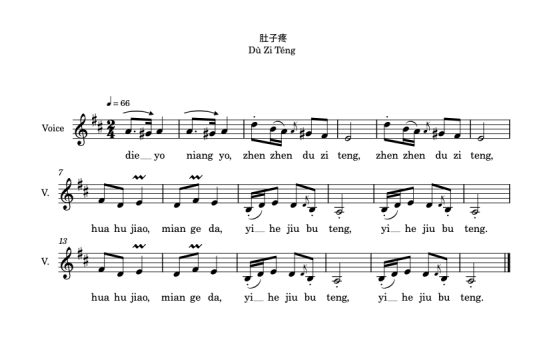
- Key: D Gong
- Mode: Hexatonic scale based on A Zhi mode with Bianzhi
- Meter: 2/4, Duple
- Structure/Form:2-bar phrases
- A (a1b1b1), mm. 1-6
- B (a2b2b2), mm. 7-12
- B (a2b2b2), mm. 13-18
Vocabulary
- 爹 (diē): father
- 娘 (niáng): mother
- 哟 (yo): interjection, used to express exhortation
- 真真 (zhēn zhēn): genuinely, truly
- 肚子疼 (dùzi téng): stomach hurts
- 花胡椒 (huā hújiāo): peppercorn
- 面疙瘩 (miàn gēda): dough drop
- 喝 (hē): drink
Cultural and Historical Information
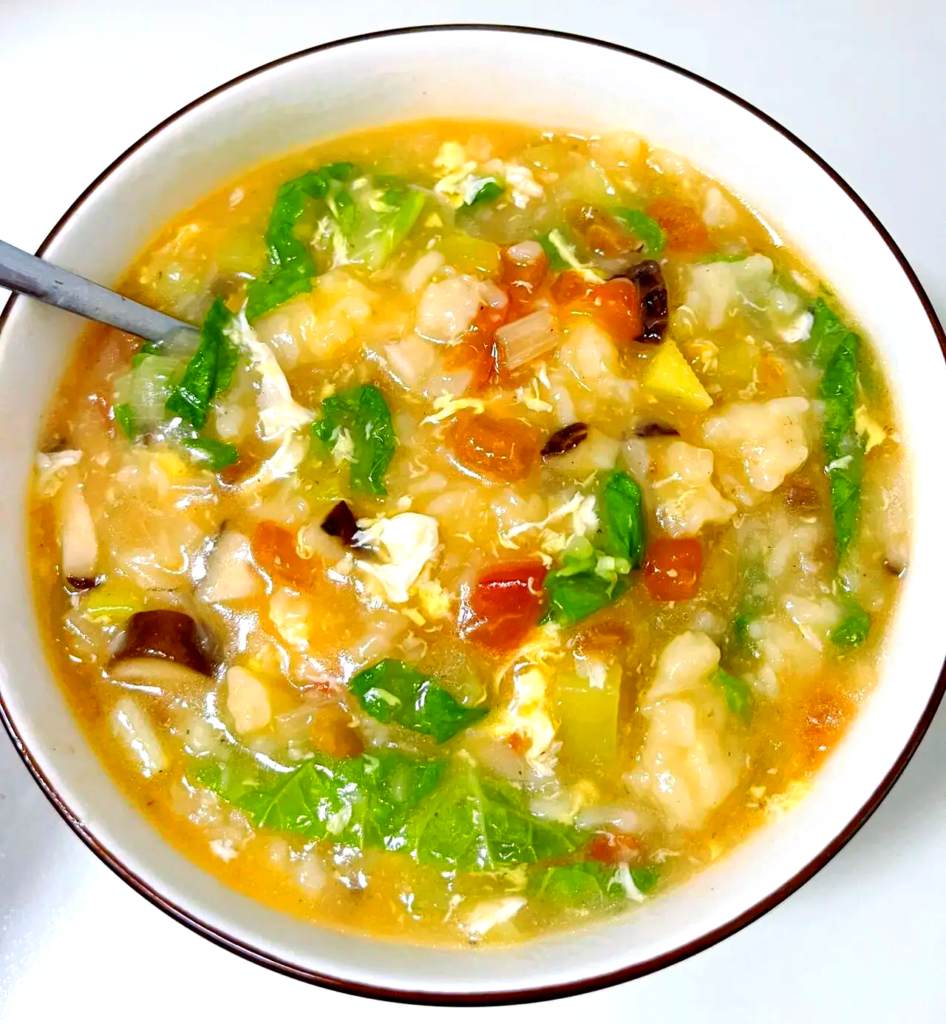
This folk song reflects everyday domestic practices and food culture in northern China, particularly in Henan Province. The lyrics reference huā hújiāo (Sichuan peppercorn) and miàn gēda (dough drop soup), a simple, home-style dish made from flour-based dough pieces cooked in broth. Dough drop soup (gēda tāng) is widely recognized as a staple of northern Chinese cuisine, valued for its simplicity, affordability, and warming qualities, especially during colder seasons. In many households, such foods are closely associated with care and comfort, often prepared as a quick remedy when someone is unwell. Within this context, the song’s playful narrative—suggesting that drinking the soup will relieve a stomachache—draws on familiar experiences of home remedies and parental caregiving. The mention of peppercorn, specifically Sichuan peppercorn, further situates the song geographically, as it is a common spice for northern and central Chinese cooking traditions. The lyrics illustrate how children’s songs can encode everyday cultural knowledge, linking food, health practices, and family life into a form that is accessible and memorable for young learners.