- Home
- Heptatonic
Heptatonic
Heptatonic
xxxxxxxxxxxxxxx
xxxxxxxxxxxxxxxxxxxxxxxxxxxxxxxxxx
xxxxxxxxxxxxxxx
xxxxxxxxxxxxxxxxxxxxxxxxxxxxxxxxxx

Chinese pentatonic system
The Chinese Pentatonic System
Because of the various different Chinese ethnic groups, Chinese traditional music includes a variety of music systems; most ethnic groups, including the Han Chinese and other minorities, use the Chinese pentatonic system, apart from the Russian ethnic group. Uyghur, Tajik, and Uzbek groups use the Persian-Arabian music system (three-quarter system) in addition to the Chinese and European music systems. In general, Chinese pentatonic music is the most widely used system in China, and has dominated Chinese traditional music for more than two thousand years.
The Chinese pentatonic scales
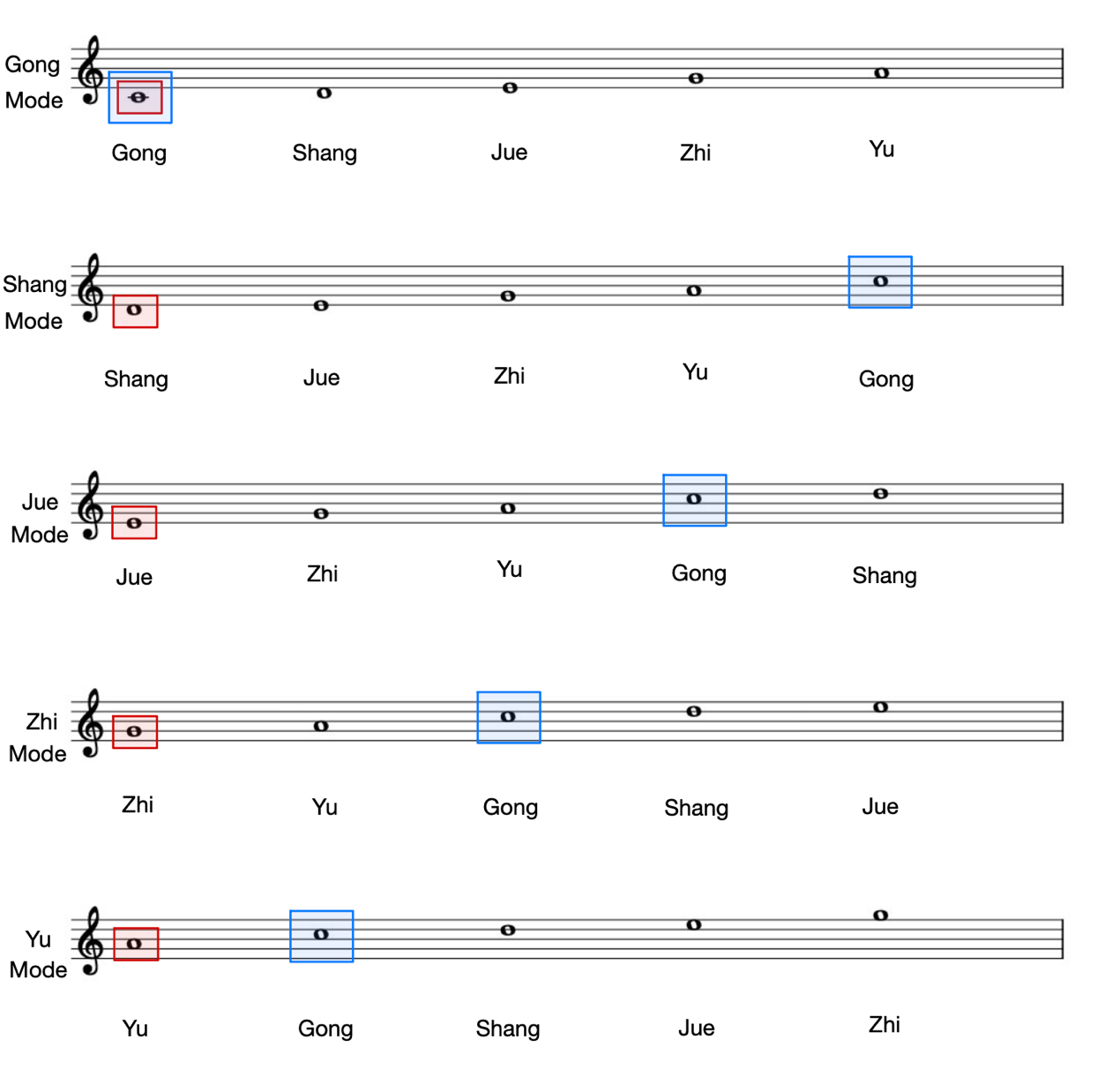
The Chinese pentatonic scales (i.e. five-tone scales) consist of five tones/degrees named Gong (宫), Shang (商), Jue (角), Zhi (徴), and Yu (羽). Each pentatonic degree can serve as the tonal center/tonic [A particular pitch within a song that behaves as a central reference. A tone that works as the point of departure and the destination in a composition], named tonal head (调头Diaotou) in Chinese traditional music theory which determines the pentatonic mode.
There are five pentatonic modes, each starting with the five tones in the pentatonic scale. These five modes, which share the same Gong tone and have the same degrees, are named the Tonggong system (同宫系统). Gong tone of the Tonggong system is called tone master (音主Yinzhu). Within one Tonggong system, the five principal modes are created by shifting the tonic to different scale degrees while retaining the same set of notes, similar to the relative modes/scales in Western music theory. As a result, each mode has a distinct musical character or mood, such as brighter or darker qualities, even though they use the same pitches. For example, all modes in the C gong system use the pitches of the C major pentatonic collection with no sharps or flats, but each mode centers a different note as its tonic.
Three and four-tone forms
Some Chinese traditional or folk music may contain only four pitches, or even as few as three. These are generally regarded as abbreviated forms of the Chinese pentatonic scale. They are not labeled “tritonic scale” or “tetratonic scale” because the scale degrees within a true scale should have fixed functional identities. Otherwise, countless “scale” forms would arise, making the concept overly complicated and weakening its theoretical precision.
(1) Four-tone form
Four-tone forms are reduced versions of the Chinese pentatonic scale. In folk music, the most common are four-tone zhi mode and four-tone yu mode. Among them, yu-mode four-tone folk songs are easier to identify when they contain the characteristic major third interval between gong and jue. Of all four-tone forms, the most common pitch set uses gong, shang, zhi, and yu, which is especially prominent in Han Chinese folk songs.
(2) Three-pitch form
Forms with fewer than five pitches also include three-tone, and even two-tone (which are relatively rare). These forms generally include the gong pitch and are often associated with specific regional styles, creating distinctive musical characteristics.
Heptatonic and hexatonic scales
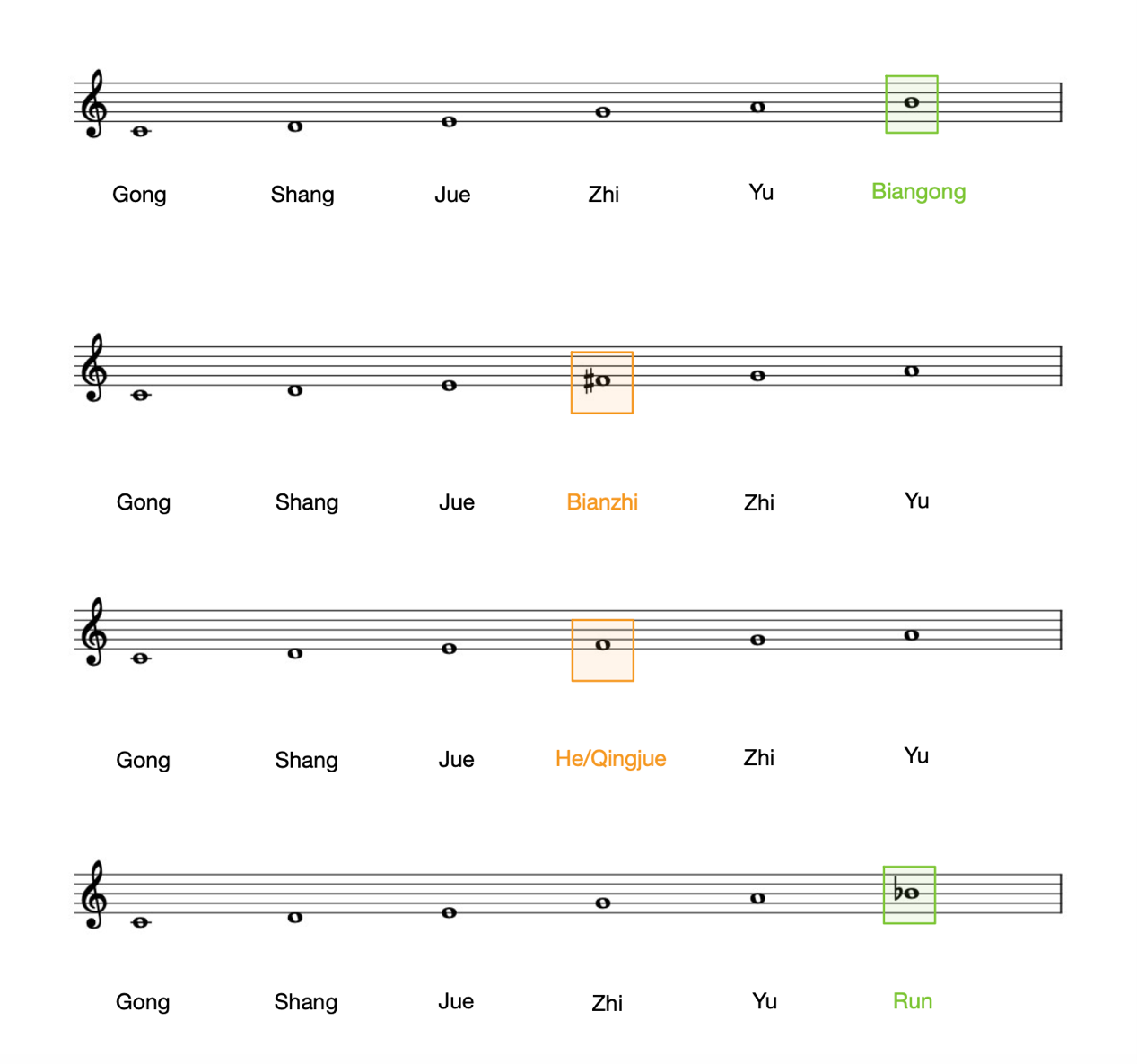
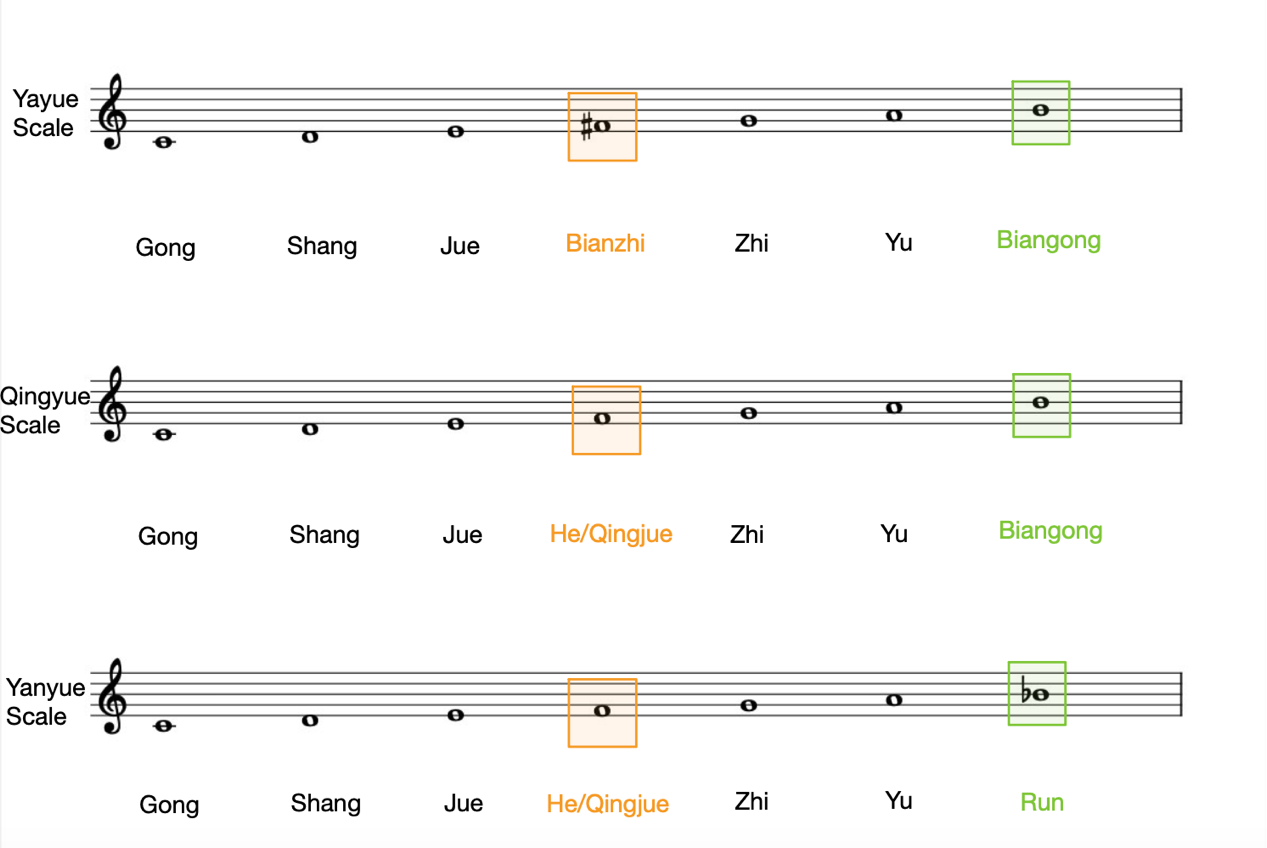
The Chinese pentatonic scale is the foundation for the hexatonic (six-tone) and heptatonic (seven-tone) scales in the Chinese music system. The heptatonic scale consists of the pentatonic scale and a specific added tone pair. The three main heptatonic scales in the Chinese music system are Yayue scale (雅乐), Qingyue scale (清乐), and Yanyue scale (燕乐). The four degrees: Qingjue/He 清角/和 (4), Bianzhi 变徴 (#4), Run 闰 (b7), Biangong 变宫 (7) are the added tones and also the 4th and 7th scale degrees in the heptatonic Gong mode. In Chinese pentatonic music, the five pentatonic tones hold an important place while the added tones are usually less frequent and never appear in important rhythmic positions. However, these added tones form semitones with their neighboring tones and bring more colors to the scales. In traditional heptatonic scales, the five pentatonic tones function as the structural core of the scale and hold primary importance.
Of the two altered tones, one is often omitted. More specifically, one may retain either Biangong, Bianzhi, Qingjue/He, or Run as an added altered tone, thereby forming different types of hexatonic (six-tone) scales.